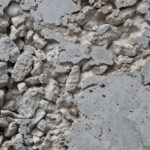
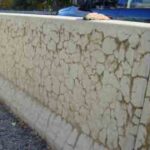
Delayed ettringite formation (DEF) is a chemical reaction that occurs in hardened concrete, leading to internal expansion and cracking. This phenomenon typically arises due to the late formation of ettringite (a calcium sulfoaluminate hydrate) after the concrete has already set and hardened. DEF is a significant durability concern, particularly in heat-cured concrete structures, as it can compromise structural integrity over time (Taylor et al., 2001).
Mechanism of DEF
Ettringite (3CaO·Al₂O₃·3CaSO₄·32H₂O) normally forms during the early stages of cement hydration. However, when concrete is exposed to high temperatures (above 70°C) during curing, the initial ettringite may decompose. Sulfate and alumina ions remain dispersed in the cement paste, only recombining later to reform ettringite when moisture becomes available (Famy et al., 2002). This delayed formation exerts expansive pressure within the concrete matrix, leading to microcracking and loss of strength (Scrivener, 2004).
Factors influencing DEF
Delayed Ettringite Formation (DEF) is a durability issue in concrete influenced by several key factors. One of the primary contributors is high-temperature curing. When concrete is exposed to excessive heat, such as during steam curing or in mass concrete pours, the risk of DEF increases significantly (Lawrence, 1995). Elevated temperatures prevent early ettringite formation, allowing it to form later under less stable conditions, which can cause internal expansion and cracking.
Cement composition also plays a crucial role. Cements with high sulfate and alkali content are more susceptible to DEF, as these components accelerate ettringite formation once favorable conditions return (Kelham, 1996).
Moisture availability is another essential factor. DEF can only develop in the presence of water, which facilitates the mobility of ions and allows ettringite to re-form and crystallize in hardened concrete (Taylor, 1997).
Lastly, concrete mix design influences DEF potential. The inclusion of supplementary cementitious materials (SCMs), such as fly ash, can reduce the risk by lowering the amount of reactive alumina and modifying the pore structure to limit ion movement (Thomas, 2001).
Effects of DEF on Concrete
Delayed Ettringite Formation (DEF) can have serious consequences on the performance and longevity of concrete. The expansion associated with DEF leads to internal stresses, which often manifest as map cracking. These cracks reduce the structural integrity and load-bearing capacity of the concrete.
As cracking progresses, the durability of the concrete declines. The open cracks allow aggressive agents such as chlorides and sulfates to penetrate more easily, accelerating reinforcement corrosion and increasing vulnerability to freeze-thaw damage (Collepardi, 2003).
In severe cases, the structural deterioration caused by DEF can become extensive. Damage may compromise the safety of the structure, requiring significant repairs or, in extreme situations, complete demolition (Skalny et al., 2002). Thus, the effects of DEF not only reduce service life but also lead to high maintenance and repair costs.
Prevention and Mitigation Strategies
Preventing Delayed Ettringite Formation (DEF) requires careful control of several factors during the design and construction of concrete structures. One of the most effective strategies is controlling curing temperatures. Research suggests that limiting the maximum curing temperature to below 70°C significantly reduces the risk of DEF (Taylor et al., 2001). This is particularly important in steam curing or mass concrete placements.
Another key approach is optimizing cement chemistry. Using cements with low alkali and sulfate content helps minimize the potential for ettringite formation under delayed conditions (Kelham, 1996).
The incorporation of supplementary cementitious materials (SCMs), such as fly ash or slag, also plays an important role in mitigation. These materials dilute reactive components in the cement and reduce the availability of alumina, thereby lowering DEF susceptibility (Thomas, 2001).
Ensuring adequate air entrainment and maintaining a low water-cement ratio improve the concrete’s resistance to cracking and reduce moisture movement, further limiting the conditions that favor DEF (Collepardi, 2003).
Using DEF for strengthening purposes
Although DEF is typically regarded as a detrimental phenomenon due to its potential to cause internal expansion and cracking, recent studies suggest that, under controlled conditions, certain aspects of DEF can be used beneficially to enhance concrete performance.
1. Early-Age Strength EnhancementEttringite formation during the early stages of hydration can contribute positively to strength development. Acting as a filler, ettringite occupies capillary pores and helps refine the microstructure before it decomposes under high-temperature curing. If ettringite later reforms in a controlled, non-destructive way, it may densify the cement matrix and enhance mechanical properties (Taylor, 1997; Famy et al., 2002).
2. Pore Structure RefinementEttringite crystals can fill voids within the cement paste, reducing porosity and improving impermeability. In cases where DEF proceeds without causing expansive damage, this densification can improve resistance to chloride ingress and sulfate attack, contributing to longer-lasting concrete (Collepardi, 2003; Thomas, 2001).
3. Self-Healing PotentialControlled DEF may also support self-healing in concrete. When microcracks develop, secondary ettringite precipitation-triggered by moisture presence-can fill and seal these cracks. This process may restore partial strength and durability, offering an internal healing mechanism (Scrivener, 2004).
4. Mitigation of Other Degradation MechanismsIn specific contexts, DEF might even mitigate other deterioration processes. For example, ettringite formation could reduce alkali availability, potentially suppressing Alkali-Silica Reaction (ASR) (Lawrence, 1995). Similarly, if ettringite is already present in the pore system, it may block further sulfate penetration, providing limited resistance to external sulfate attack (Kelham, 1996).
Conditions for Beneficial DEF
For Delayed Ettringite Formation (DEF) to yield positive effects without compromising concrete durability, several strict conditions must be maintained:
1. Controlled Temperature CuringCuring temperatures must be kept below 70°C to prevent the decomposition of early-formed ettringite and avoid triggering expansive recrystallization later. Maintaining moderate temperatures ensures that ettringite forms gradually and safely within the matrix (Taylor et al., 2001).
2. Optimal Sulfate ContentThe cement’s sulfate content must be carefully balanced. Excessive sulfates increase the risk of uncontrolled ettringite formation and swelling, while insufficient amounts may inhibit the beneficial effects. A well-regulated sulfate level supports stable ettringite development without damaging expansion (Shi et al., 2001).
3. Moisture RegulationBecause water is essential for ettringite recrystallization, controlling moisture exposure is critical. Limited and gradual water ingress helps promote uniform and non-expansive ettringite formation, which can aid in densifying the microstructure and filling microcracks (Famy et al., 2002).
Bibliography
- Collepardi, M. (2003). The New Concrete. Grafiche Tintoretto.
- Famy, C., Scrivener, K. L., & Taylor, H. F. W. (2002). “Delayed ettringite formation: Microstructural and nanochemical studies.” Cement and Concrete Research, 32(3), 341-346.
- Kelham, S. (1996). “The effect of cement composition and fineness on expansion associated with delayed ettringite formation.” Cement and Concrete Composites, 18(3), 171-179.
- Lawrence, C. D. (1995). “Delayed ettringite formation: An issue?” Advances in Cement Research, 7(25), 1-9.
- Scrivener, K. L. (2004). “Delayed ettringite formation: A microstructural perspective.” Concrete Science and Engineering, 6(23), 139-146.
- Shi, C., Stegemann, J. A., & Caldwell, R. (2001). “Effect of supplementary cementing materials on the specific conductivity of pore solution and its implications on delayed ettringite formation.” Cement and Concrete Research, 31(6), 871-876.
- Taylor, H. F. W. (1997). Cement Chemistry. Thomas Telford.
- Taylor, H. F. W., Famy, C., & Scrivener, K. L. (2001). “Delayed ettringite formation.” Cement and Concrete Research, 31(5), 683-693.
- Thomas, M. D. A. (2001). “The role of fly ash in suppressing DEF.” ACI Materials Journal, 98(4), 251-257.